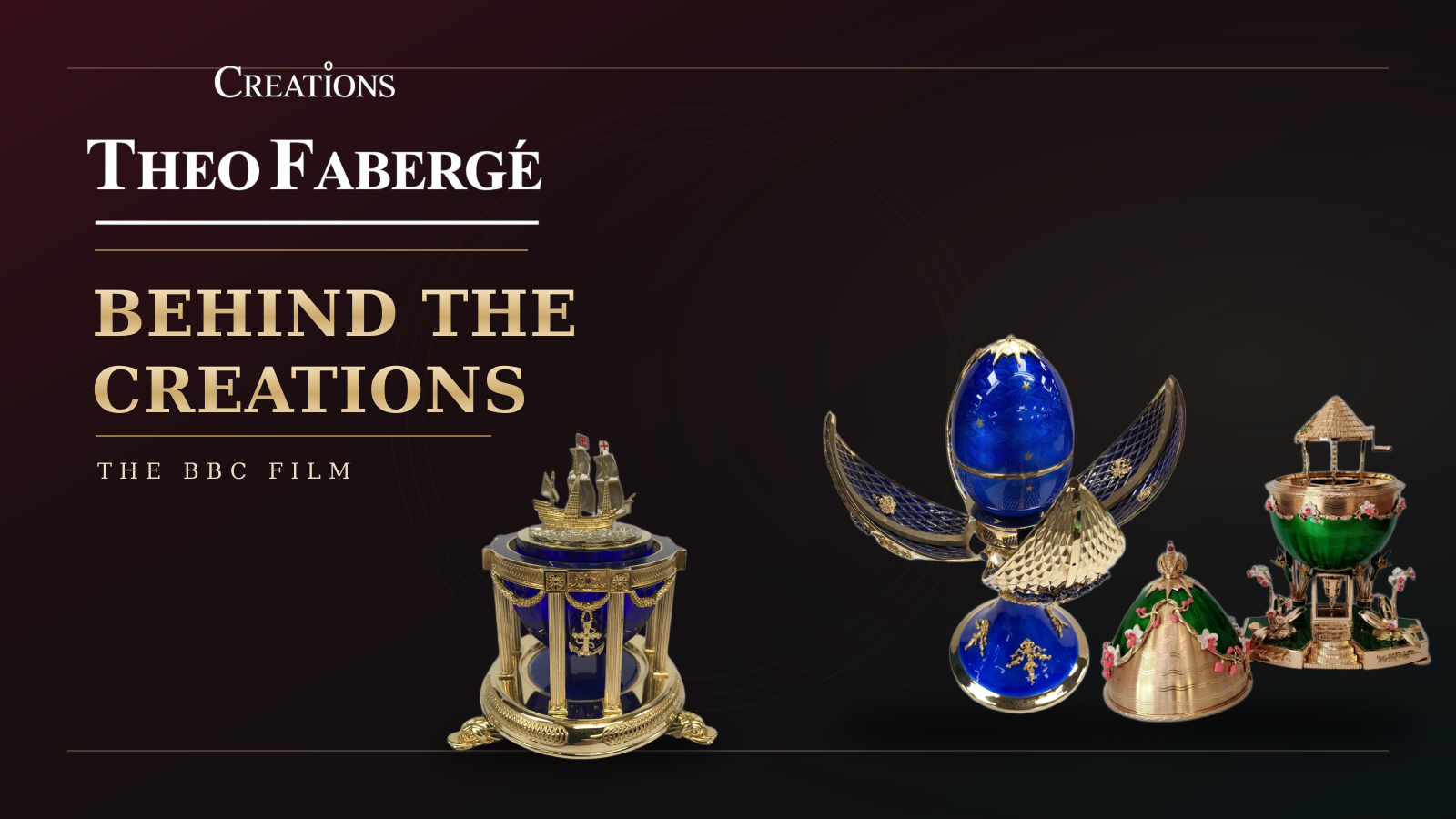
Fabergé Imperial Easter Eggs: The Art of Surprise
The Fabergé Imperial Easter Eggs transformed an Easter gift into an extraordinary expression of the jeweller’s art. Created for the Russian Imperial family, they combined precious materials, inventive craftsmanship and surprises chosen to delight their recipients.
Their fascination extends beyond the exterior. A miniature palace, a coronation carriage or a moving animal could lie concealed within, giving each gift a story to discover. This relationship between appearance, ingenuity and personal meaning became a defining feature of the historic House of Fabergé’s work. Each commission invited specialist craftspeople to unite their skills, bringing together decorative beauty, miniature detail and carefully engineered concealed discoveries.
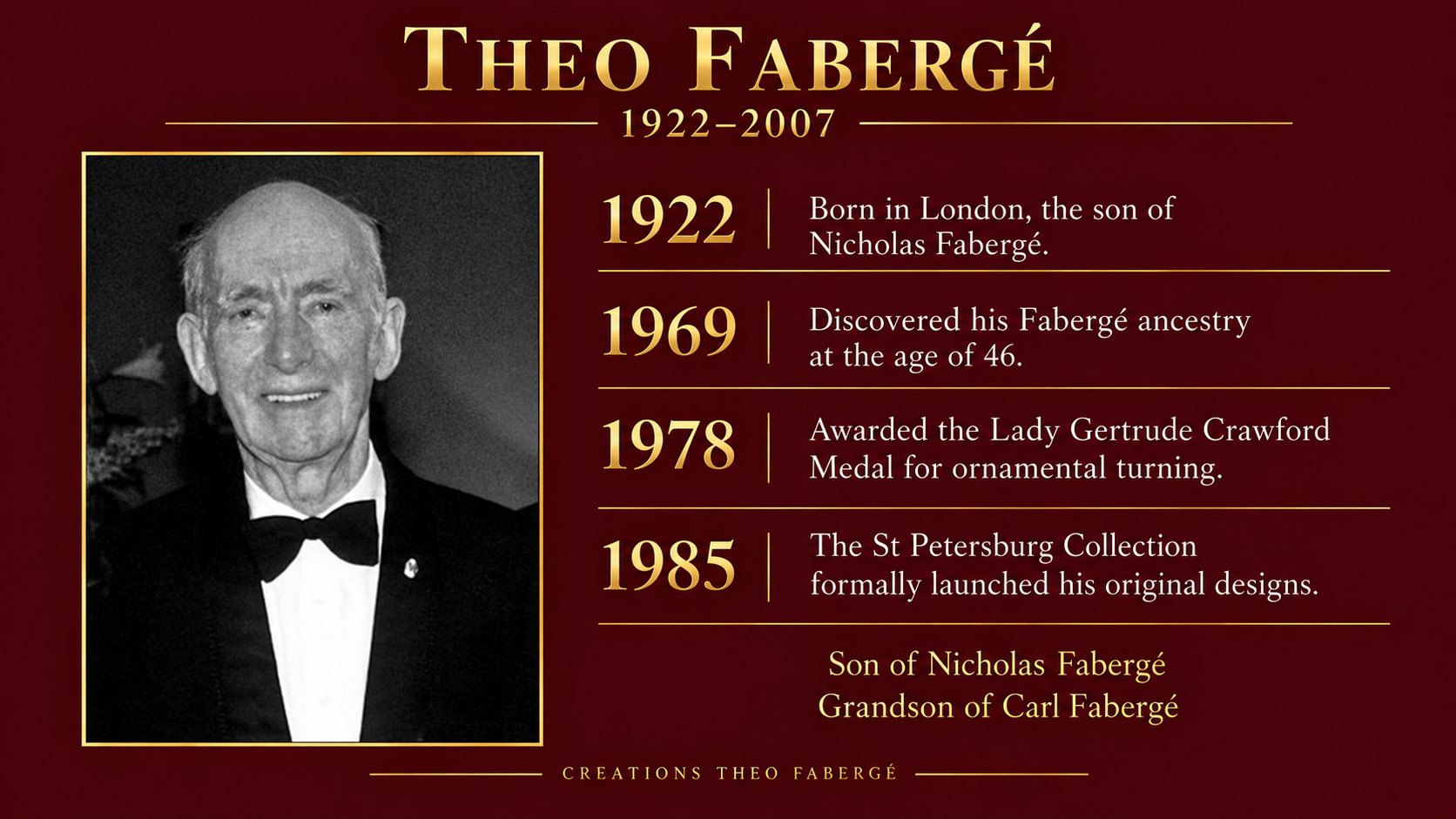
For Carl’s grandson, Theo Fabergé, the egg later became a medium for his own original designs, developed in England through a distinctive combination of precision engineering, ornamental turning, and imagination.
A Gift That Began a Tradition
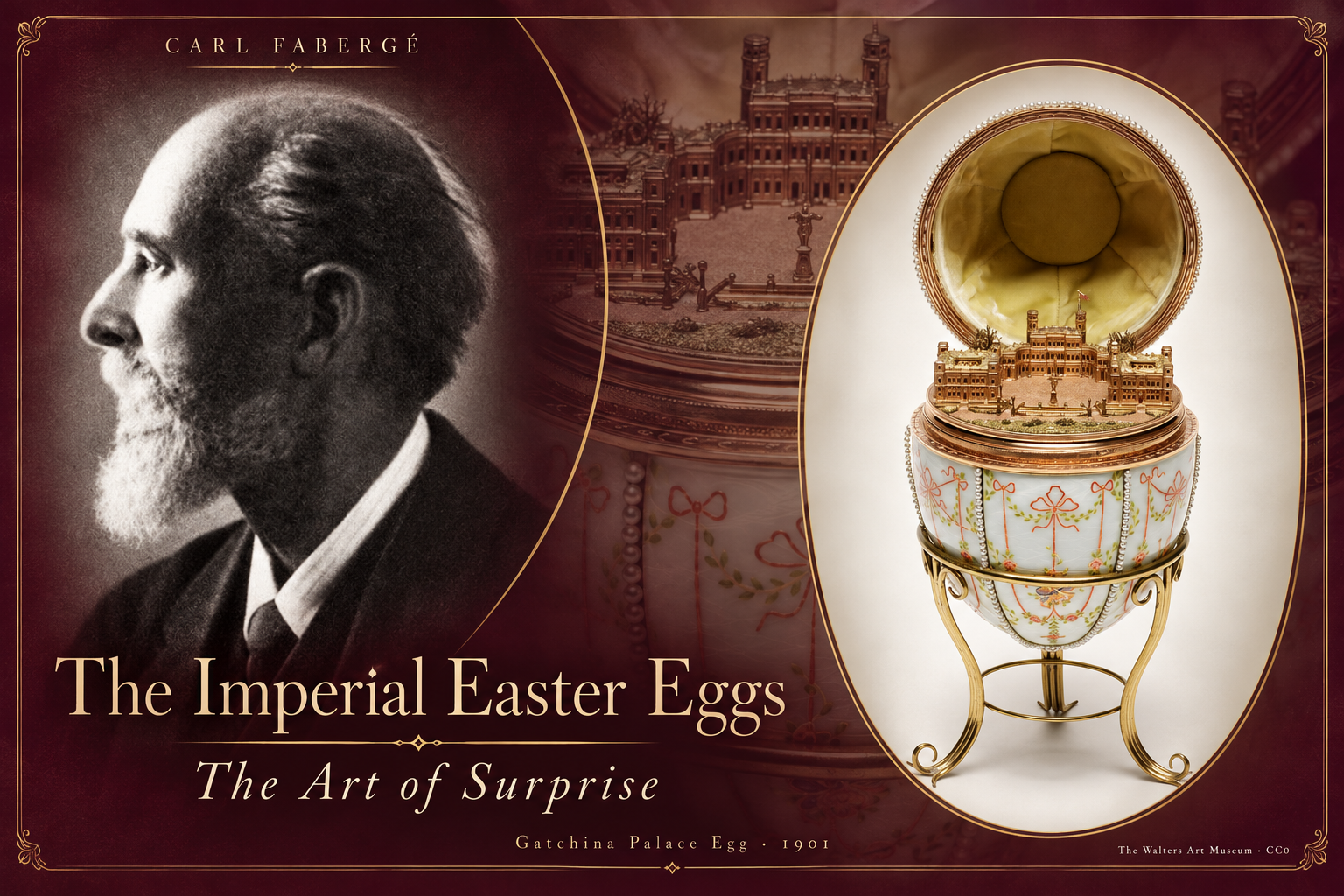
In 1885, Emperor Alexander III commissioned an Easter gift from the House of Fabergé for his wife, Empress Maria Feodorovna. At first glance, the Hen Egg resembled a simple white egg. Its gold shell, covered in opaque white enamel, concealed a sequence of increasingly intricate discoveries.
Inside rested a golden yolk containing a gold hen. The hen originally held a miniature Imperial crown and a tiny ruby egg pendant. These last two elements are now missing; the shell, yolk and hen survive.
The Emperor took a personal interest in the commission. His brother, Grand Duke Vladimir, helped coordinate the work and sent instructions on how to open its delicate components.
The gift established a tradition that Alexander III and his son, Nicholas II, continued. Between 1885 and 1916, the House delivered fifty Imperial Easter Eggs.
The Art of Surprise
The surprise allowed an Egg to reveal its meaning gradually. Opening the exterior might uncover a familiar place, a loved one’s portrait or a miniature mechanism whose movement brought the object to life.
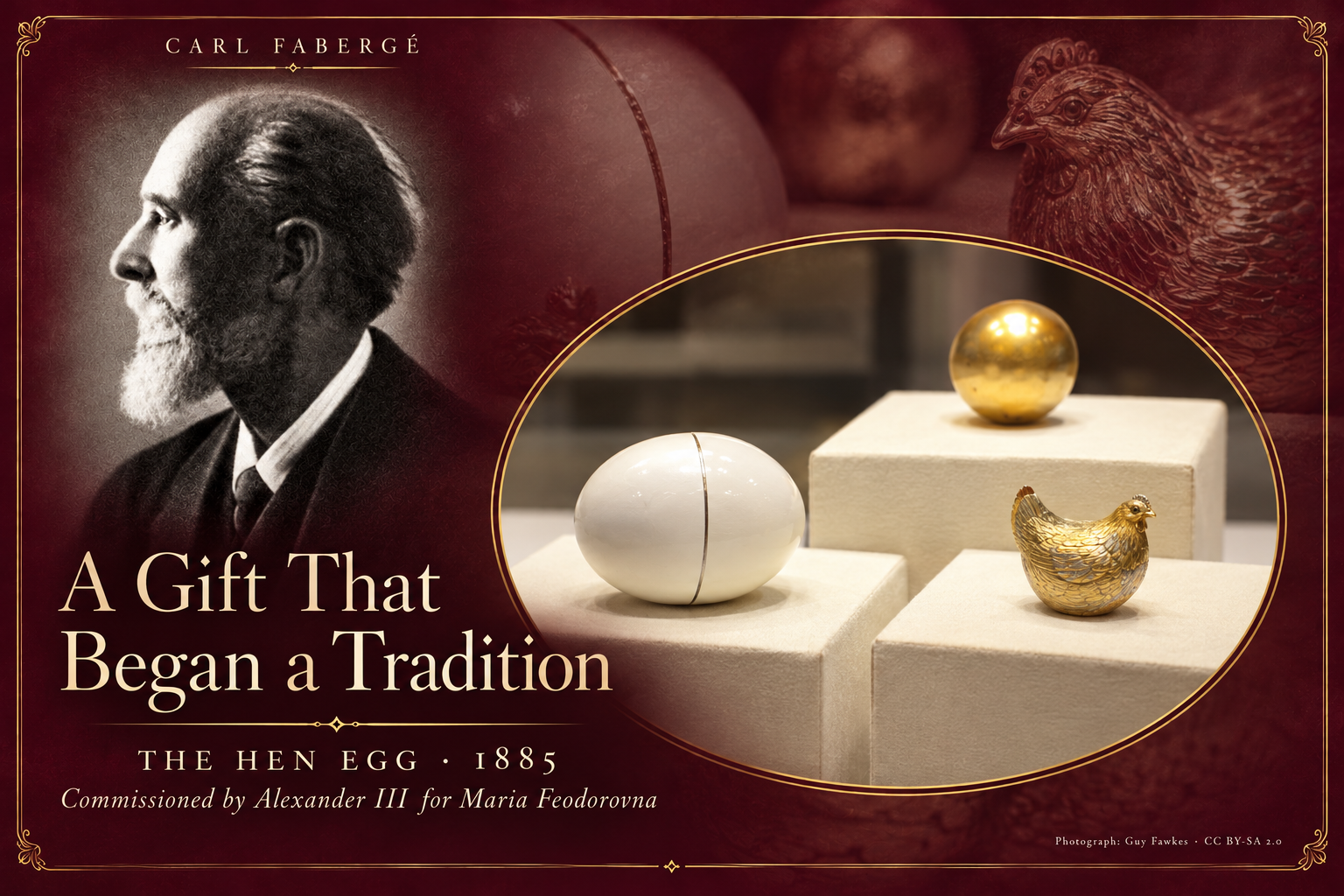
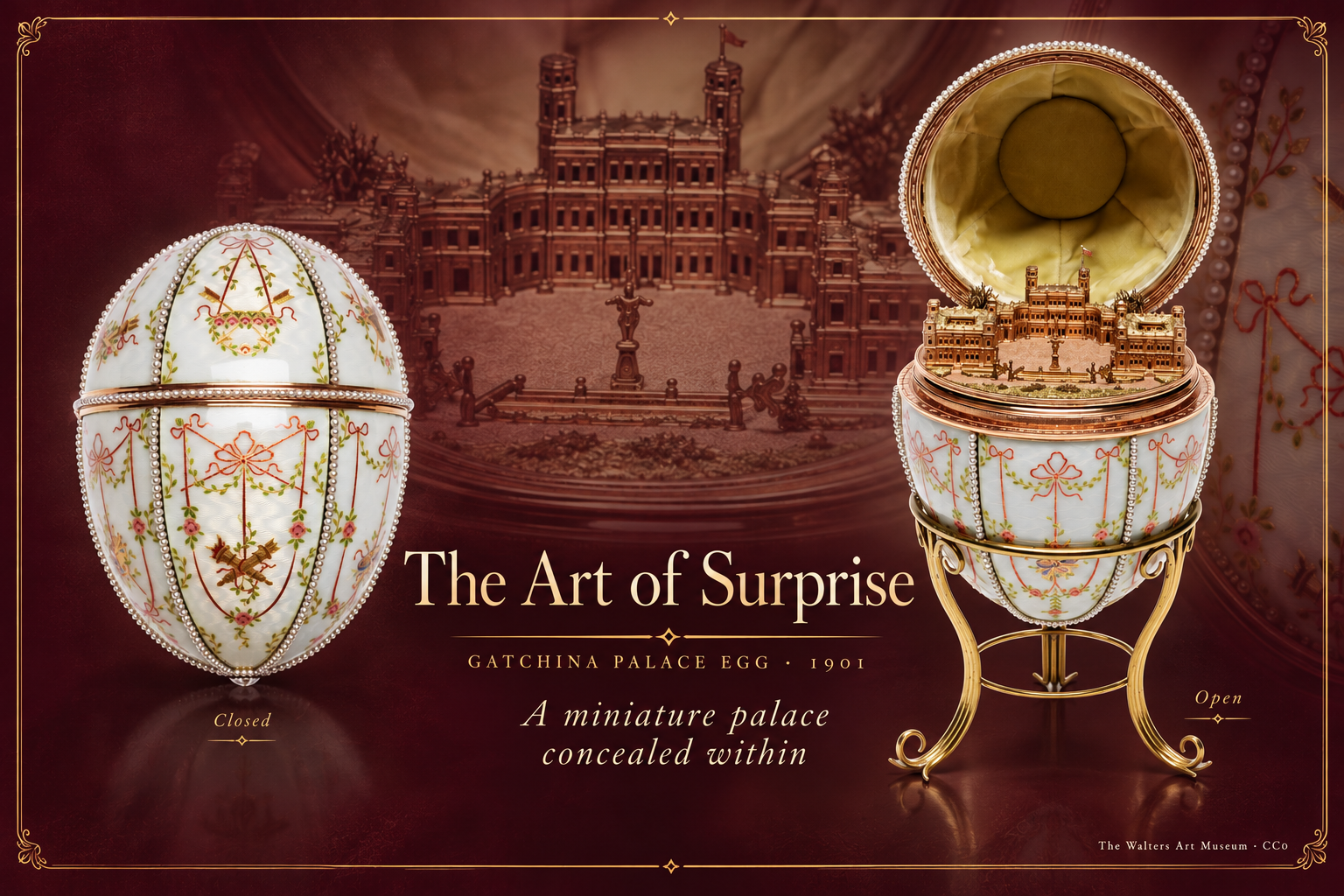
The Gatchina Palace Egg of 1901 offers a remarkable example. Nicholas II gave it to his mother, Maria Feodorovna, whose life was closely tied to the palace. Within its enamelled shell sits a miniature gold replica, complete with architectural and landscape details.
Here, the surprise is more than a demonstration of technical skill. It turns a royal residence into an intimate, recognisable gift.
Craftsmanship Without Compromise
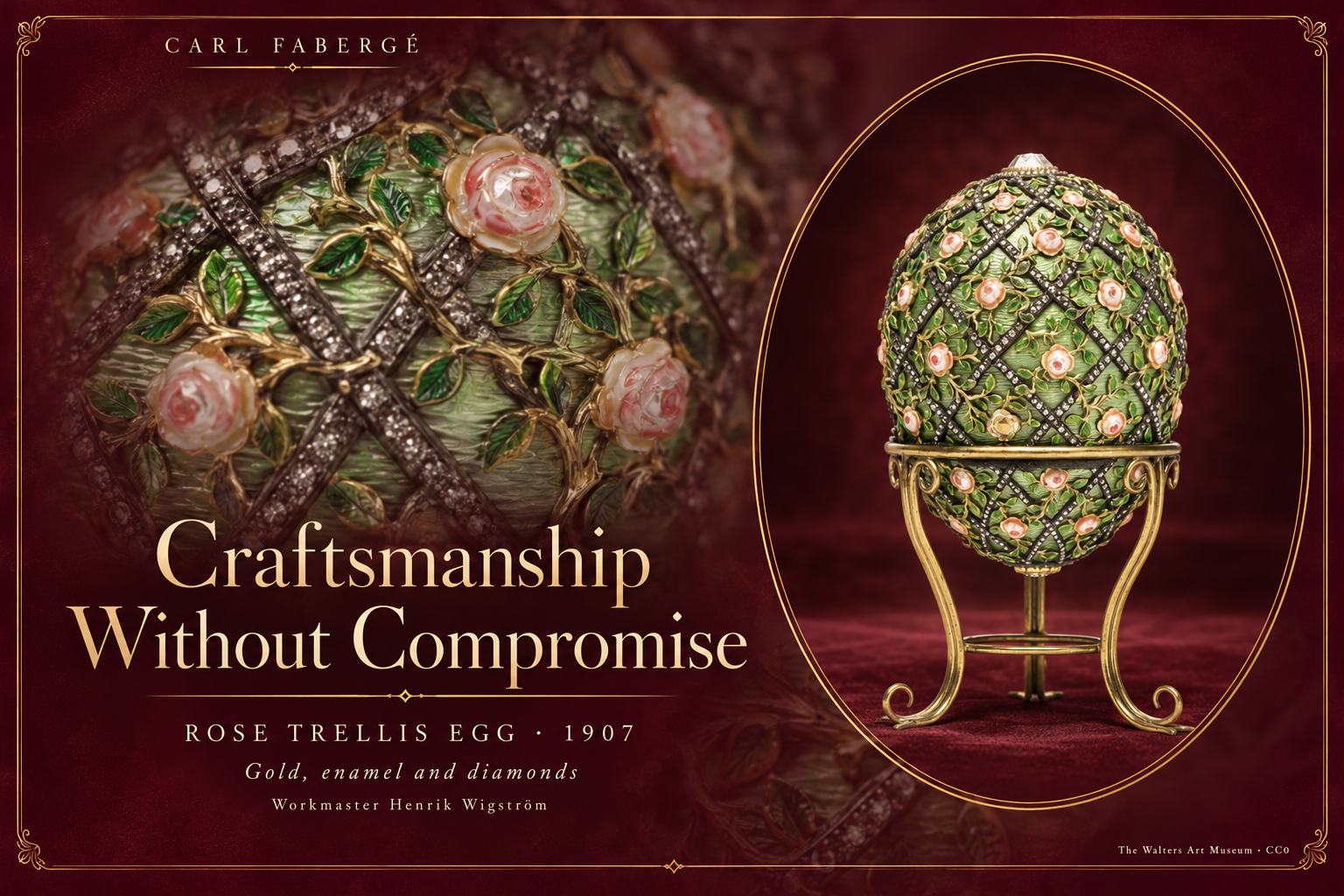
The Imperial Eggs were collaborative achievements. Designers, goldsmiths, enamellers, engravers, stonecarvers, gem-setters and makers of miniature mechanisms contributed specialist skills under the direction of the House of Fabergé.
Their artistry depended as much on proportion, colour, and construction as on the value of their materials. Hinges and mechanisms had to work reliably within small spaces; decorative surfaces required painstaking preparation and finishing.
The Rose Trellis Egg of 1907, made under workmaster Henrik Wigström, brings these disciplines together. Its enamel roses and diamond-set trellis create an intricate composition that rewards close examination.
Gifts With Personal Meaning
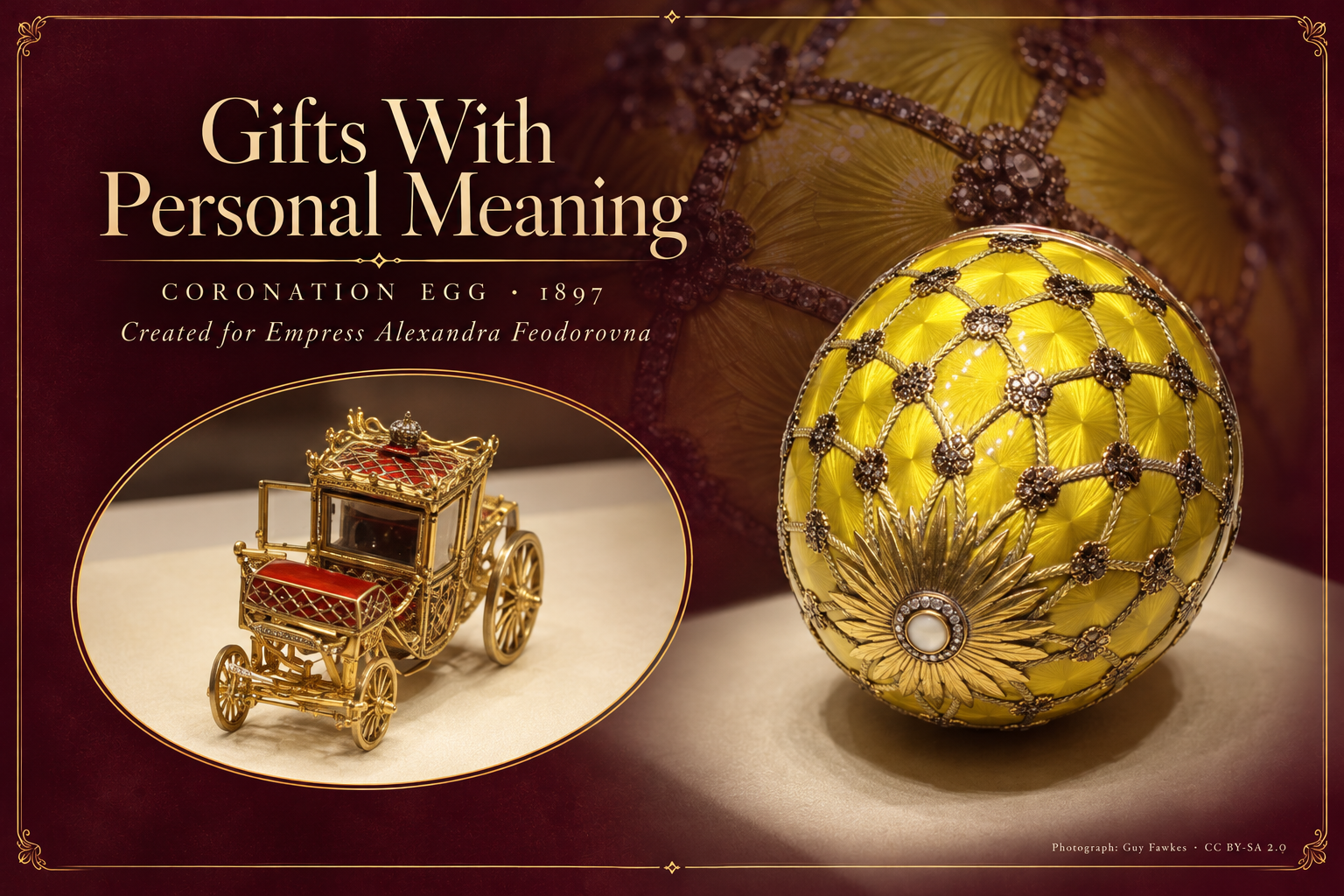
The Imperial Eggs recorded moments in the family’s life. Under Nicholas II, commissions included gifts for both his wife, Empress Alexandra Feodorovna, and his mother, the Dowager Empress Maria Feodorovna.
The Coronation Egg, presented to Alexandra in 1897, commemorated the previous year's coronation. Its yellow enamel exterior recalls the ceremonial robes, while its surprise reproduces the carriage that carried her into Moscow. The miniature has opening doors, folding steps and working wheels.
Such details made the gift personal. Its meaning came from the event it recalled and the craftsmanship it displayed.
Beyond the Imperial Court
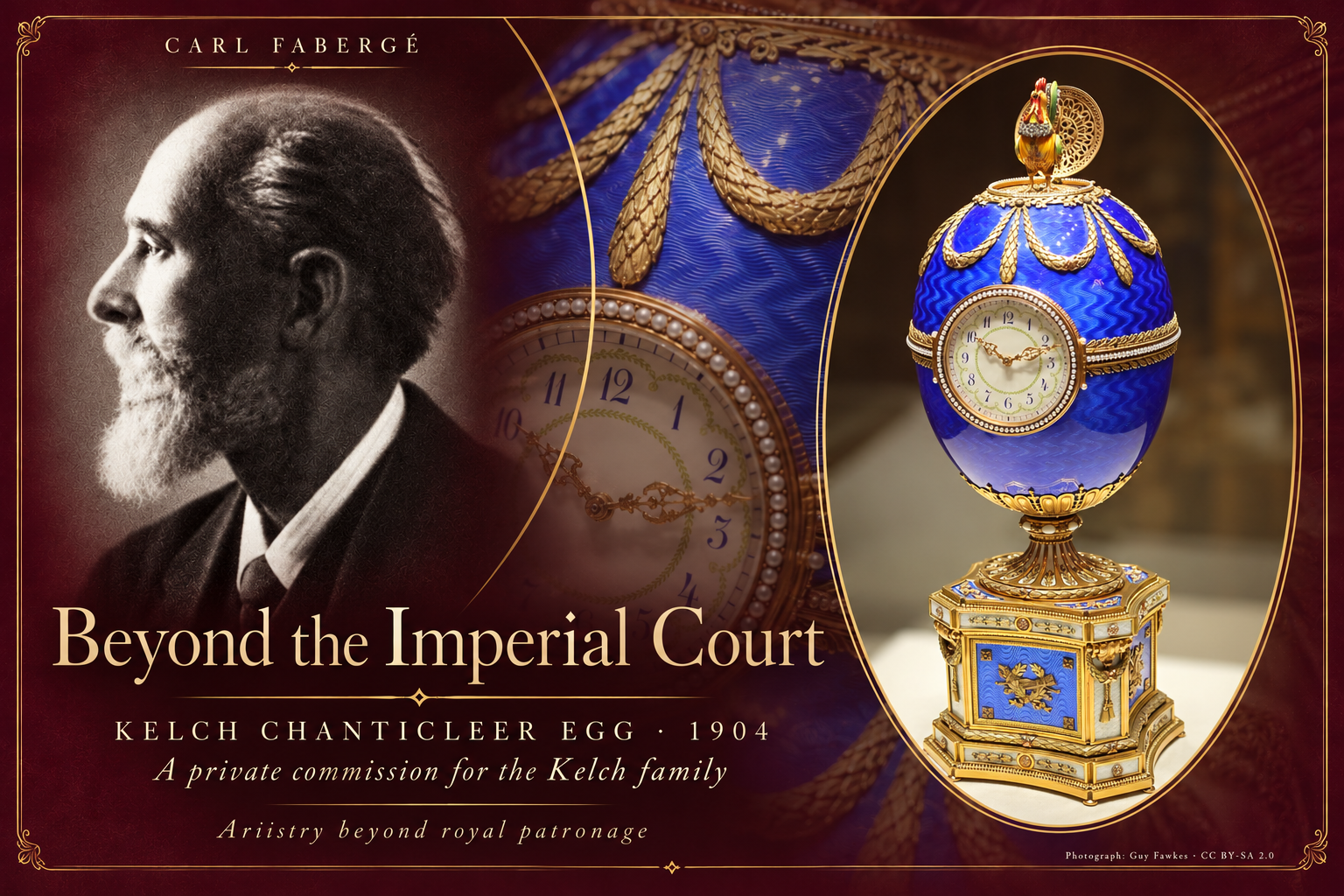
The Imperial commissions formed part of a much broader creative world. The historic House also made jewellery, timepieces, miniature carvings and decorative objects, alongside elaborate eggs for private patrons.
The Kelch Chanticleer Egg of 1904, made for Varvara Kelch, is one such private commission. Its blue enamel body incorporates a clock and a cockerel that rises from the top. Although as ambitious as the Imperial works, it is not an Imperial Egg.
The egg form also appeared in miniature pendants, bringing enamel, precious metals and carved materials into jewellery worn close to the heart.
A History Still Being Discovered
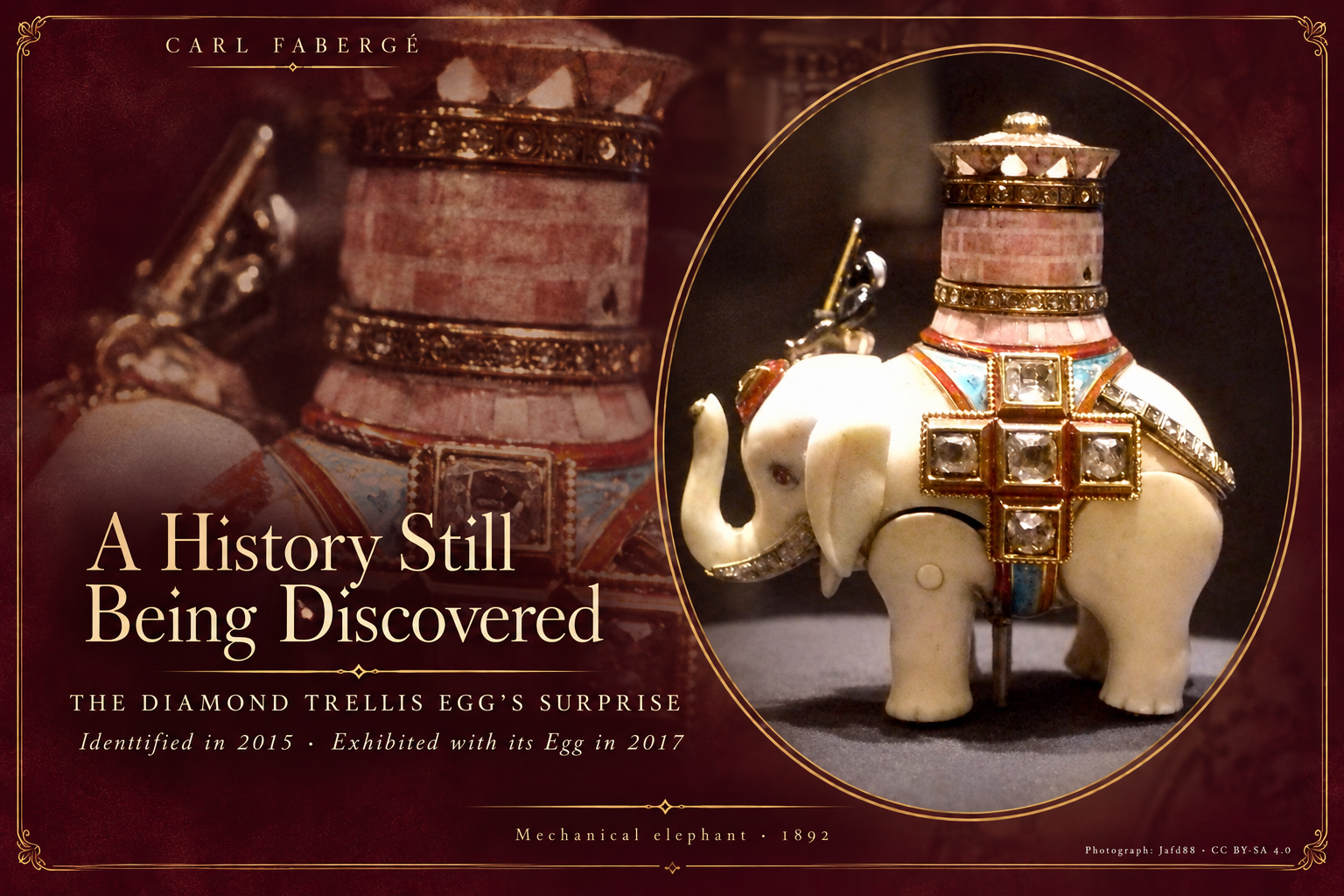
Archival research and conservation continue to reveal connections between surviving objects and their original commissions.
In 2015, researchers identified the Diamond Trellis Egg’s mechanical elephant surprise in the Royal Collection. Examination uncovered Fabergé marks inside the tower on its back. In 2017, the elephant and the 1892 Egg were exhibited together at the Houston Museum of Natural Science for the first time in more than eighty years.
Historic photographs offer another form of evidence. Research reported in 2017 proposed identifications of the missing surprises of the Rose Trellis and Clover Leaf Eggs in a photograph of Empress Alexandra. These findings help reconstruct their appearance; they do not mean the missing objects themselves have been recovered.
Theo Fabergé: An Original English Chapter
Born in London in 1922, Theo Fabergé built a career in precision engineering before discovering his Fabergé family identity as an adult. His mastery of ornamental turning and understanding of materials and mechanisms shaped an original body of work conceived in England.
Nature, history, music and architecture provided subjects for his Egg Creations. In selected designs, opening the Egg reveals a handcrafted surprise that develops the exterior’s story. Other designs express their meaning through form, materials and decorative detail.
Theo’s work belongs to the family’s creative heritage through its authorship, ingenuity and craftsmanship. Each design reflects his own interests and imagination.
Today, Creations Theo Fabergé continues to realise his original designs in strictly limited editions. Alongside the Egg Creations, the collection includes Passion Pendants, watches, jewellery and objets d’art.
Discover the Creations
Explore Theo Fabergé’s Egg Creations to discover how a subject becomes a complete work of art, from its exterior to the surprise within selected designs. Discover Passion Pendants for a wearable expression of the egg form, or explore the specialist craftsmanship that brings Theo’s designs to life.