The Fabergé Family Legacy
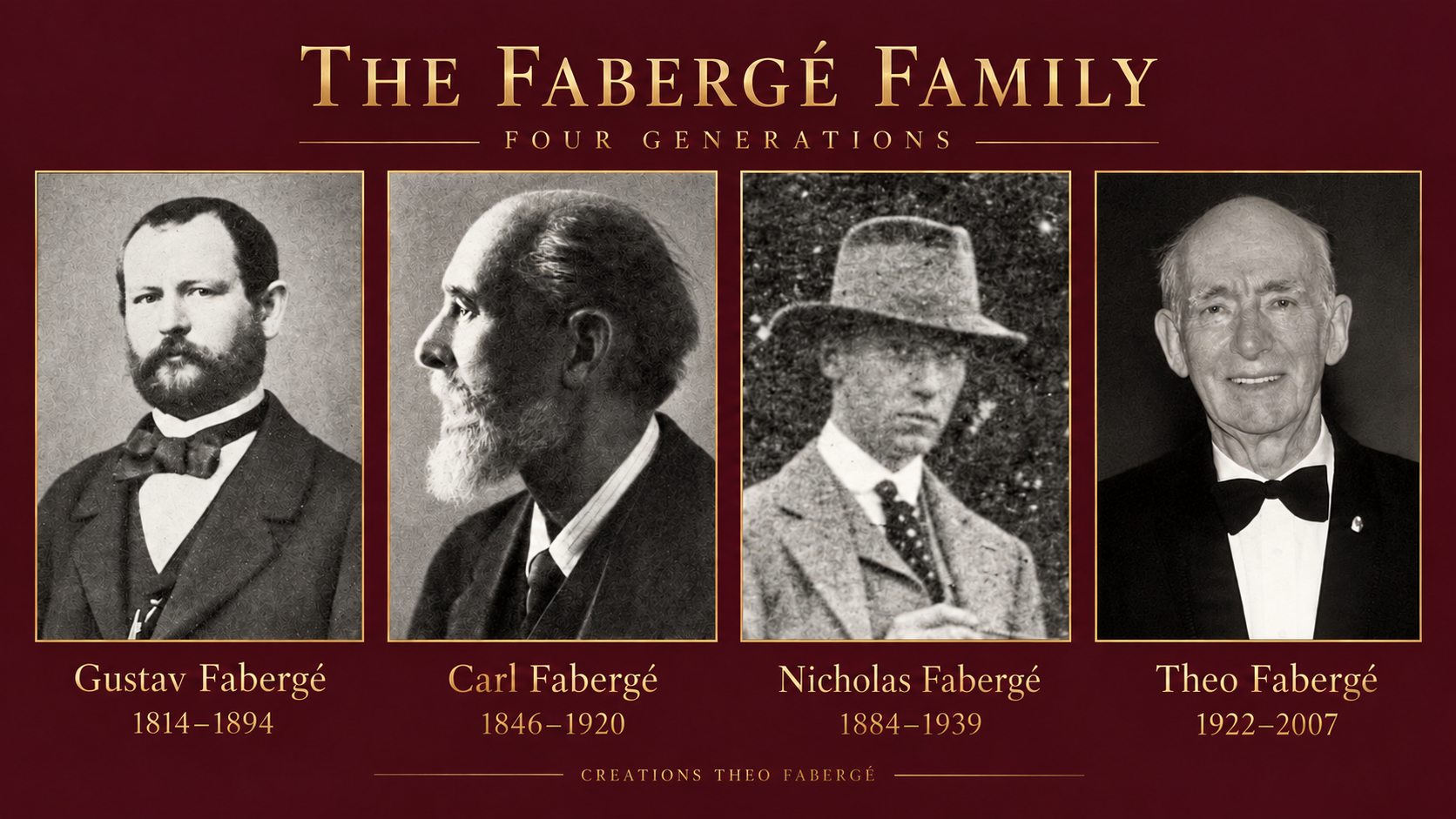
From Gustav Fabergé to Theo Fabergé
A story of artistry, innovation, and enduring craftsmanship from 19th-century Russia to today.
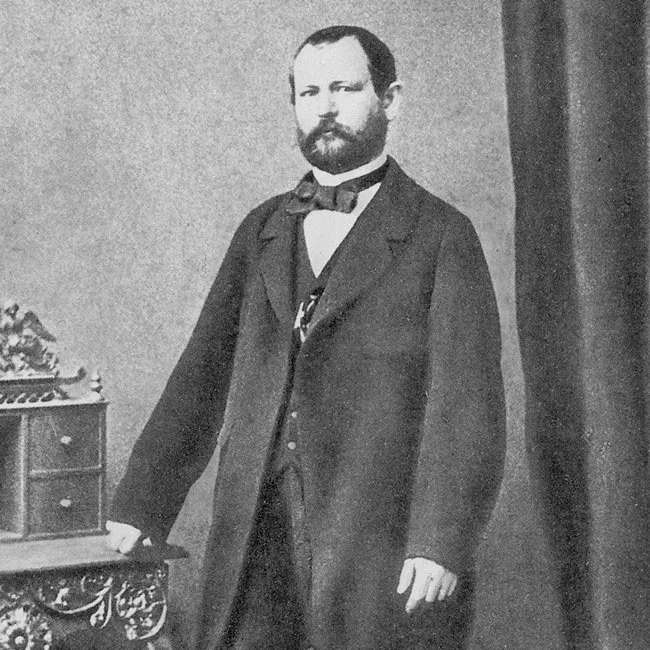
Gustav Fabergé
ANCIENT ROOTS
The Fabergé family is French by origin. Their home was the village of La Bouteille in the Picardy region of Northeastern France. They were Huguenots in a predominantly Roman Catholic country. In 1685, King Louis XIV of France revoked the Edict of Nantes, thereby depriving Protestants of religious freedom and civil liberties.
THE ESCAPE FROM CATHOLIC FRANCE
In the years after 1685, a quarter of a million French Huguenots fled to England, the Netherlands, the fledgling North America, and Russia.
The family first sought refuge in German territories, including Schwedt-on-Oder. In the late eighteenth century, they settled in Pernau, now Pärnu in Estonia, then part of the Russian Baltic province of Livonia.
Over the previous 100 years, Czar Peter the Great’s influence and cosmopolitan experience had made Russia an attractive country for craftsmen. Catherine the Great’s creation of her Winter Palace in St. Petersburg on the banks of the Neva absorbed artistic creations from the entire civilised world, and her reign also saw religious tolerance enshrined in Russian law. The Imperial court spoke French.
ESTABLISHMENT IN RUSSIA
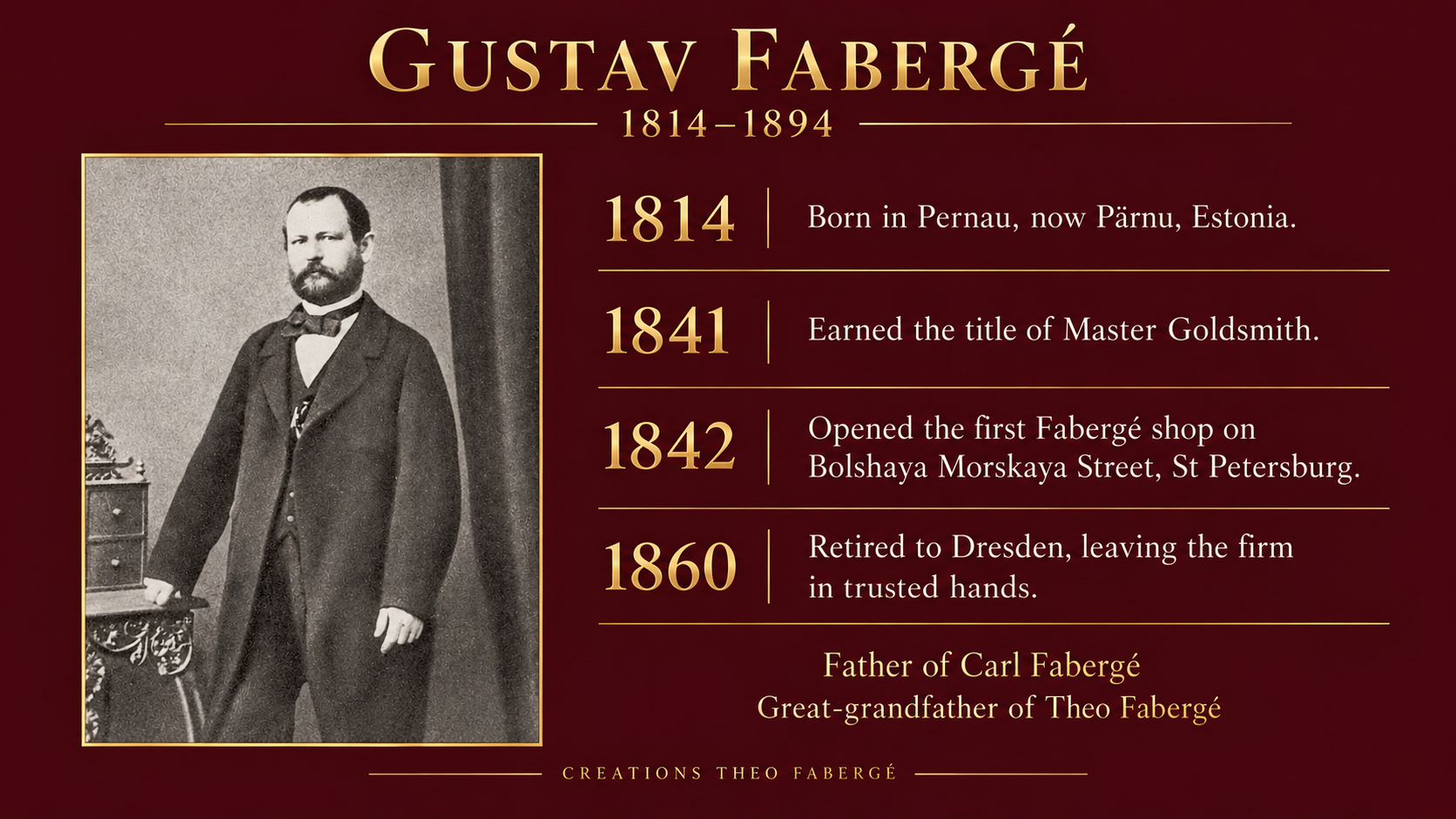
Born in Pernau, now Pärnu in Estonia, in 1814, Gustav Fabergé moved to St. Petersburg to train as a goldsmith. He apprenticed with Andreas Ferdinand Spiegel before joining Keibel, a firm associated with the Russian Imperial court.
In 1841, Gustav qualified as a master goldsmith. The following year, he opened his own jewellery shop on Bolshaya Morskaya Street and married Charlotte Jungstedt, the daughter of a Danish artist. Their son Peter Carl was born in St. Petersburg in 1846.
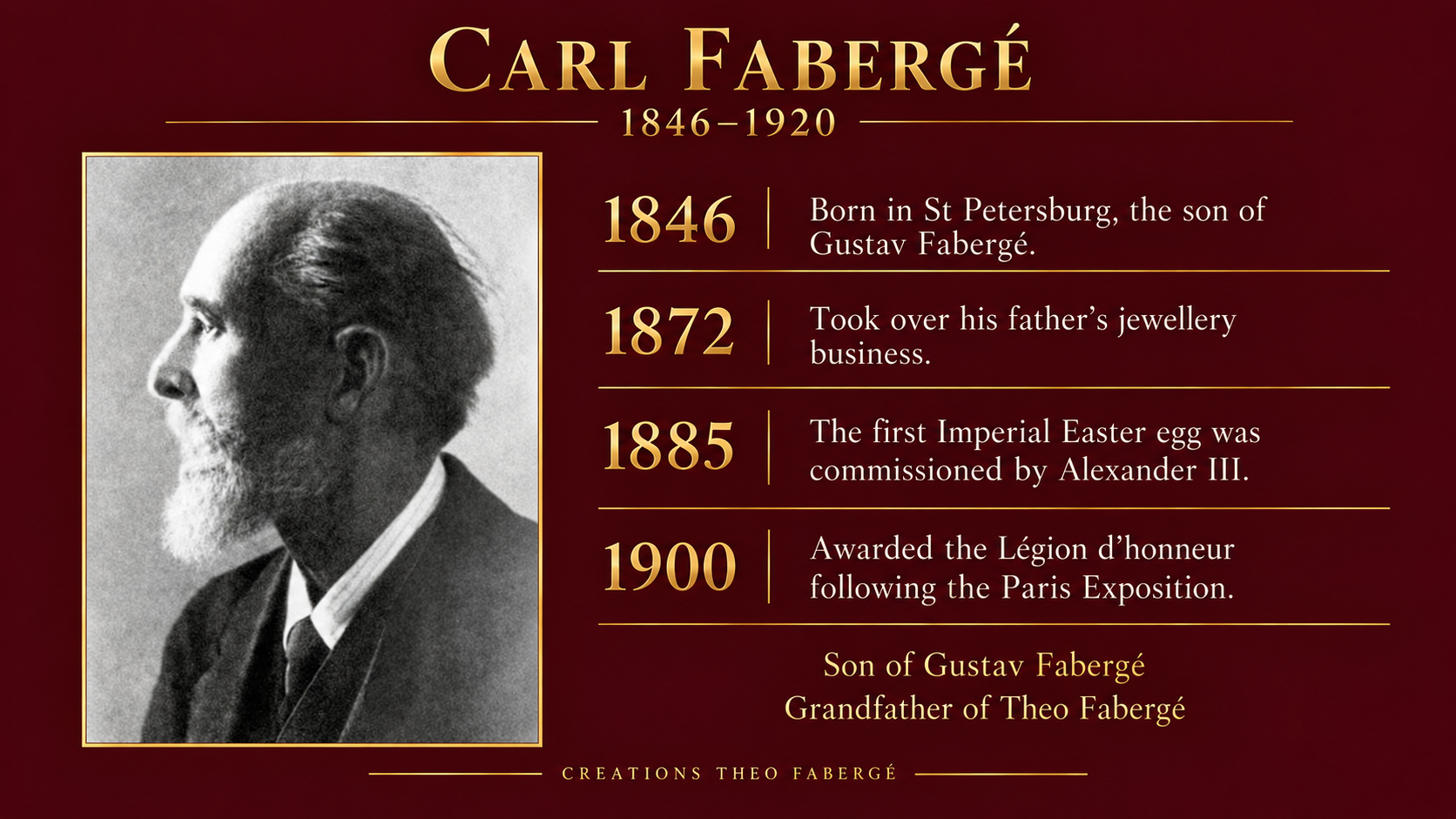
CARL FABERGÉ
Born in St. Petersburg in 1846, Peter Carl Fabergé inherited his father Gustav's jewellery business. His training and travels through Europe, together with his study and restoration of historic objects at the Hermitage, helped shape his artistic direction.
Taking charge of the family business in 1872, Carl brought together talented designers and specialist craftspeople to create jewellery, enamelled objects, hardstone carvings, timepieces, and objects of personal use. His achievement lay in uniting artistic invention with exceptional standards of craftsmanship.
The first Imperial Easter Egg, commissioned by Alexander III in 1885, began the celebrated tradition of gifts for the Russian Imperial family. These extraordinary commissions became the House’s most recognisable works, while representing one part of a much wider creative world.
THE ENGLISH CONNECTION BEGINS
The House of Fabergé opened its London branch in 1903, bringing its work closer to British patrons and an international circle of collectors. King Edward VII and Queen Alexandra were enthusiastic collectors, and the firm later occupied premises on Dover Street and New Bond Street.
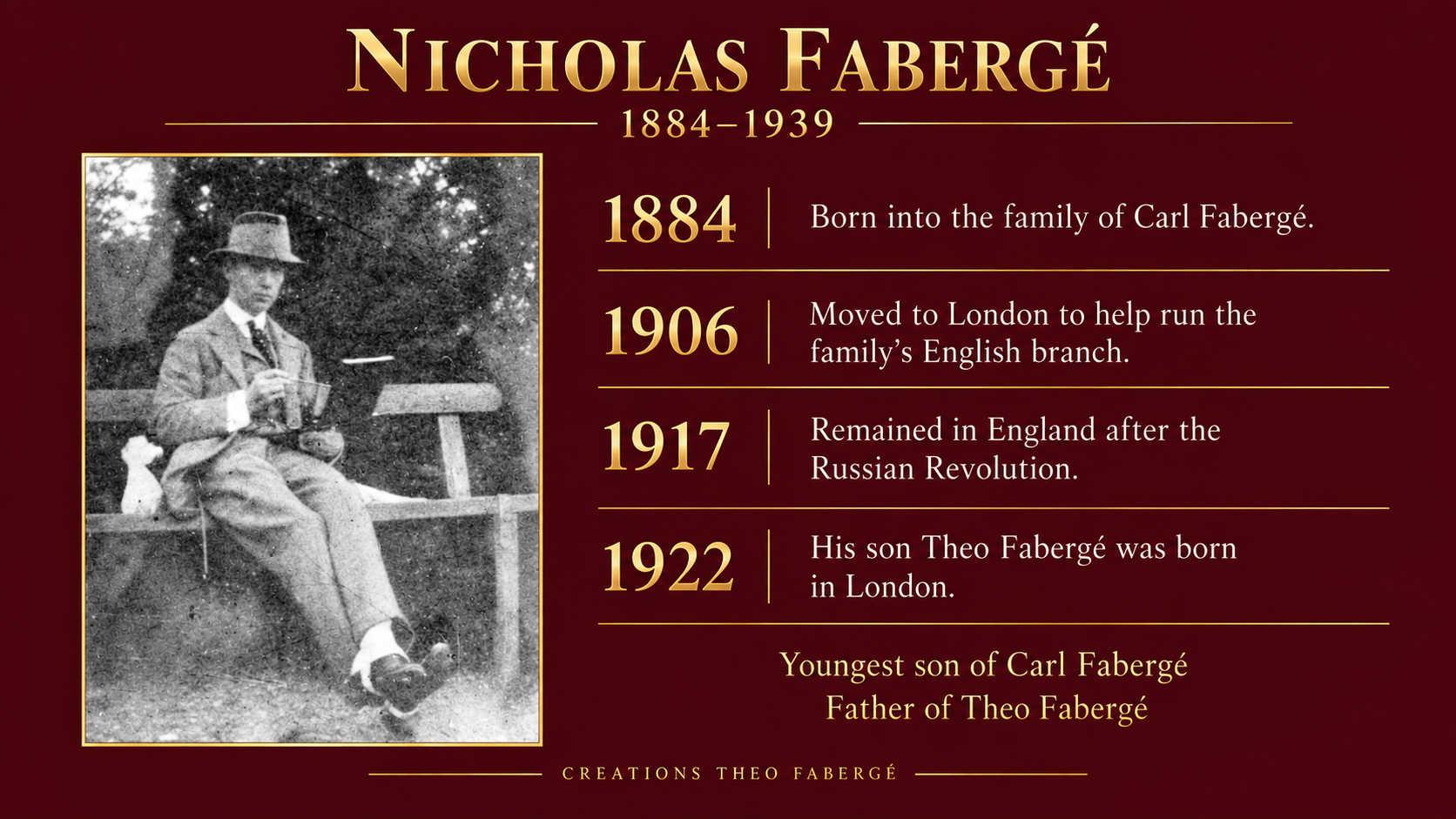
Carl’s youngest surviving son, Nicholas, worked in the London business alongside Henry Bainbridge. Although the branch’s activities declined during the First World War and it closed in early 1917, the family’s connection with England endured.
Nicholas remained in England after the Russian Revolution. His son Theo was born in London in 1922, establishing the direct family connection through which an original English chapter would later emerge.

The Fabergé family at their summer villa in Levashovo, Russia.
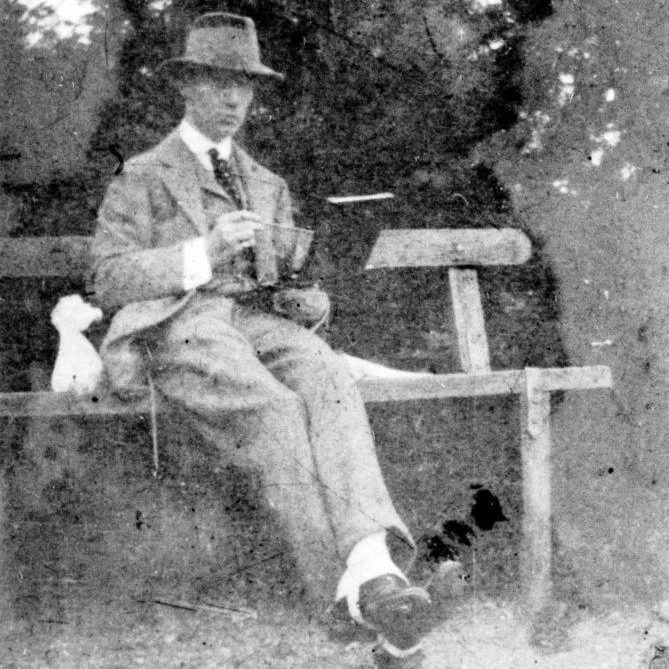
The only photo known to exist of Nicholas Fabergé
THE ESCAPE FROM REVOLUTIONARY RUSSIA
A revolutionary committee took over the Russian parent company in 1917, and that same year the final stock items in England were sold off.
Peter Carl, with the help of the British Embassy, escaped from Russia and, via Riga, Berlin, Frankfurt, Hamburg, and Wiesbaden, finally reached Lausanne in Switzerland. Here, he settled at the Bellevue Hotel with his wife, who had escaped separately in the company of her eldest son Eugene. Carl died on 24 September 1920; Augusta, his wife, survived until 27 January 1925.
CARL’S SONS EUGÈNE AND ALEXANDER
Carl’s first and third sons, Eugène and Alexander, moved to France in 1924. Eugène died childless in 1960.
By his first marriage, Alexander had a son also named Alexander; he pursued a distinguished career as a geneticist and died childless in 1988.
CARL’S SON AGATHON
Carl’s second son, Agathon, settled in Finland and studied philately. Agathon’s first wife settled in Switzerland; she had a guest house, and later a chicken farm, and two of her sons emigrated to Brazil. Agathon’s third son worked for his uncles in Paris and then returned to work for the jeweller Lombarde in Geneva; he died in 1982, leaving an unmarried daughter, Tatiana, born in 1930. The fourth son, Igor, died childless in 1982. The fifth son, Rurik, died childless around 1978.
CARL’S SON NICOLAS FABERGÉ
Nicolas Fabergé Carl, Carl’s fourth surviving son, was in England during the Russian Revolution and remained there. He established himself as a photographer. Married to Marion Tattershall, who bore no children, he also had a relationship with his photographic model Dorise Claddish, whom he had met when they worked together at the Bond Street branch of Fabergé. Dorise and Nicolas Fabergé had a son, Theo, whom his father named Theo Fabergé in 1922.
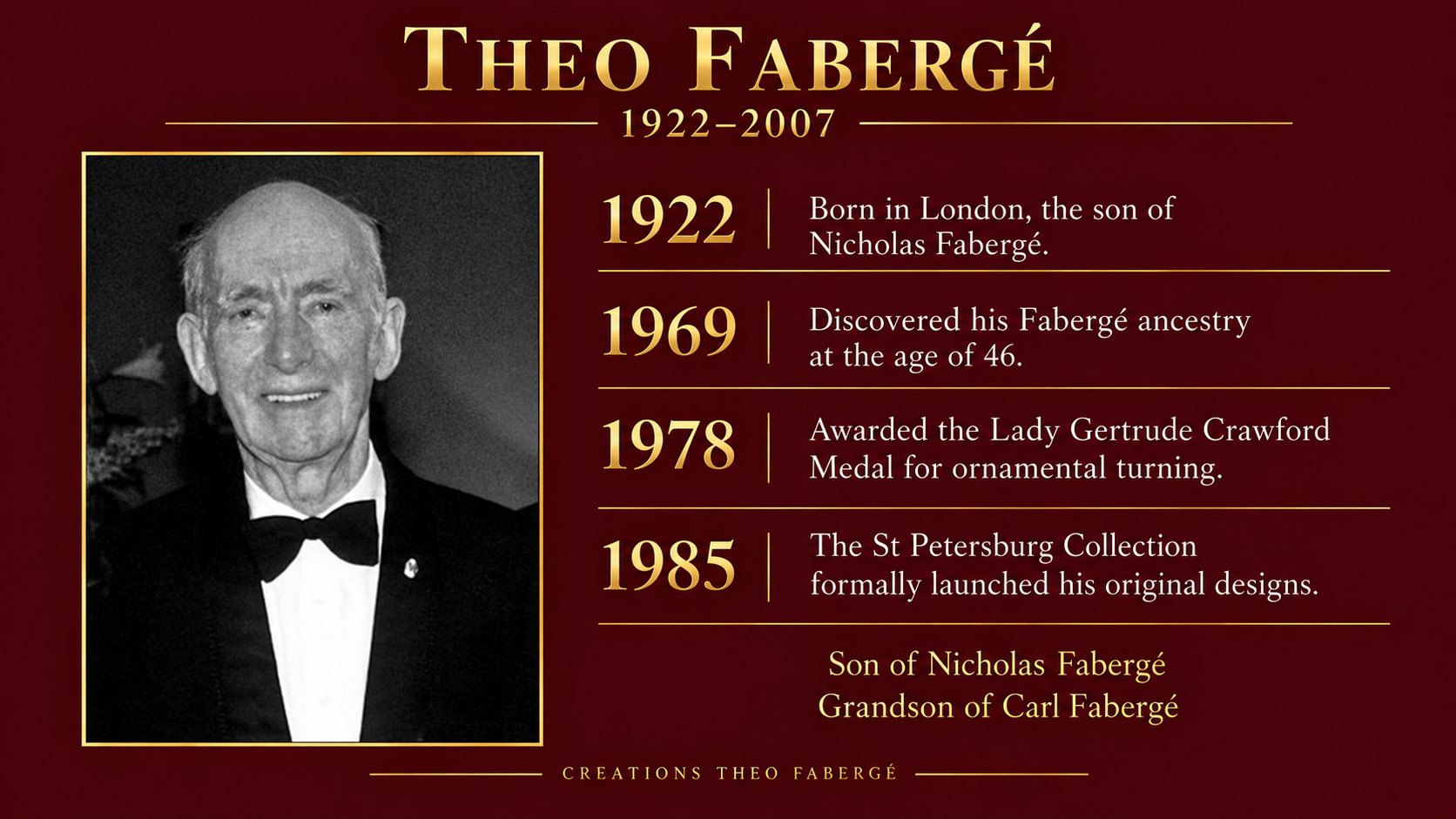
THEO FABERGÉ, GRANDSON OF CARL FABERGÉ
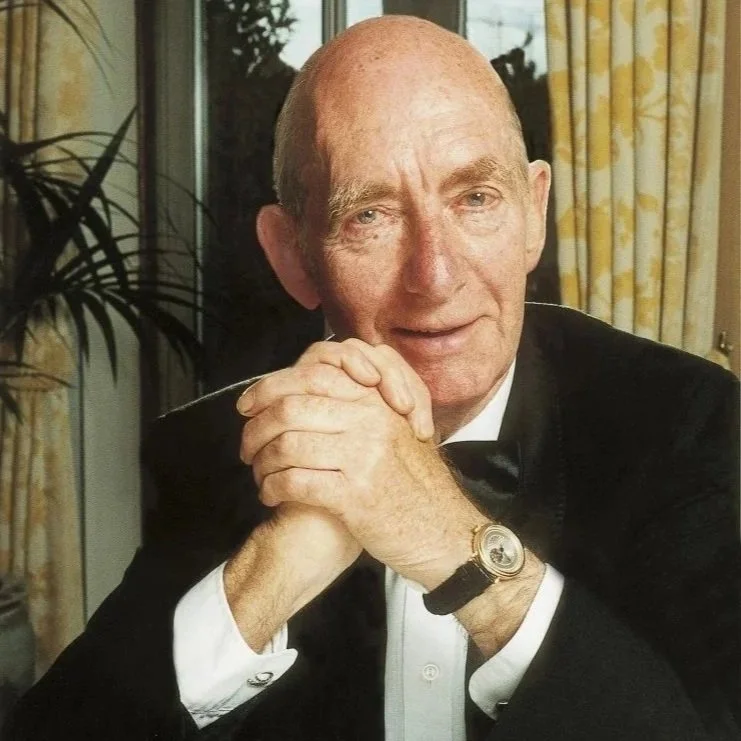
Born in London in 1922, Theo Fabergé was the son of Nicholas Fabergé and a grandson of Peter Carl Fabergé. He did not discover his true identity until January 1969, after decades spent developing the precision-engineering skills that would later shape his work as a designer and master craftsman. Through ornamental turning, silversmithing and original limited-edition designs, Theo created a distinct English chapter in the family’s creative history. The St. Petersburg Collection was established in 1984 to bring his work to a wider audience, and his artistic legacy continues today through Creations Theo Fabergé.
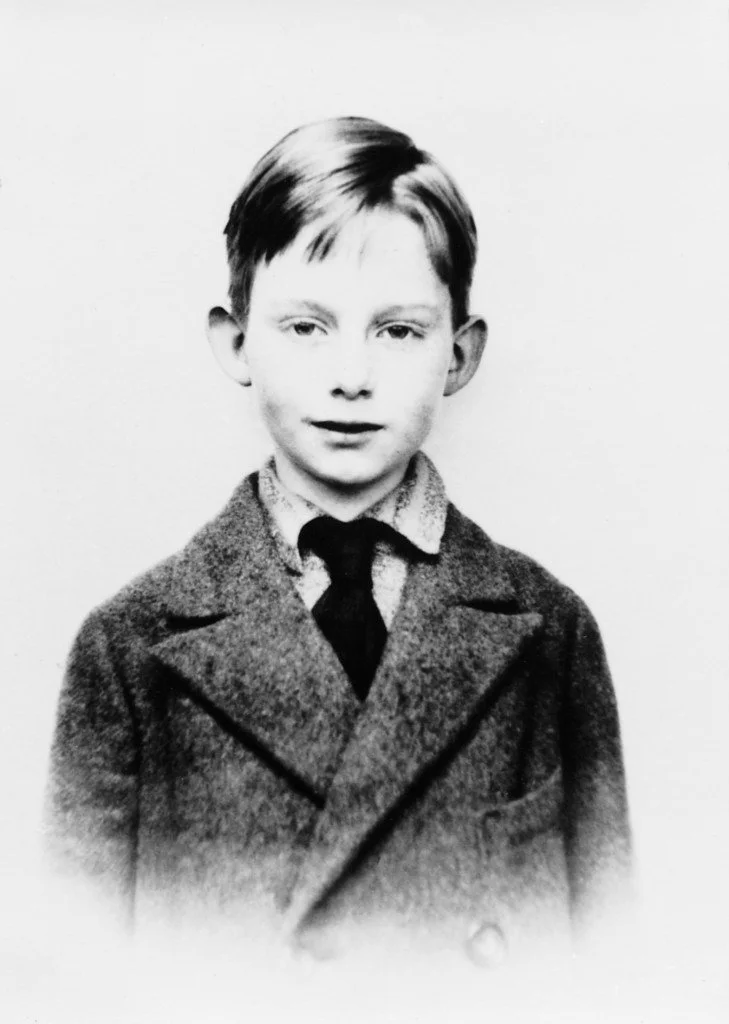
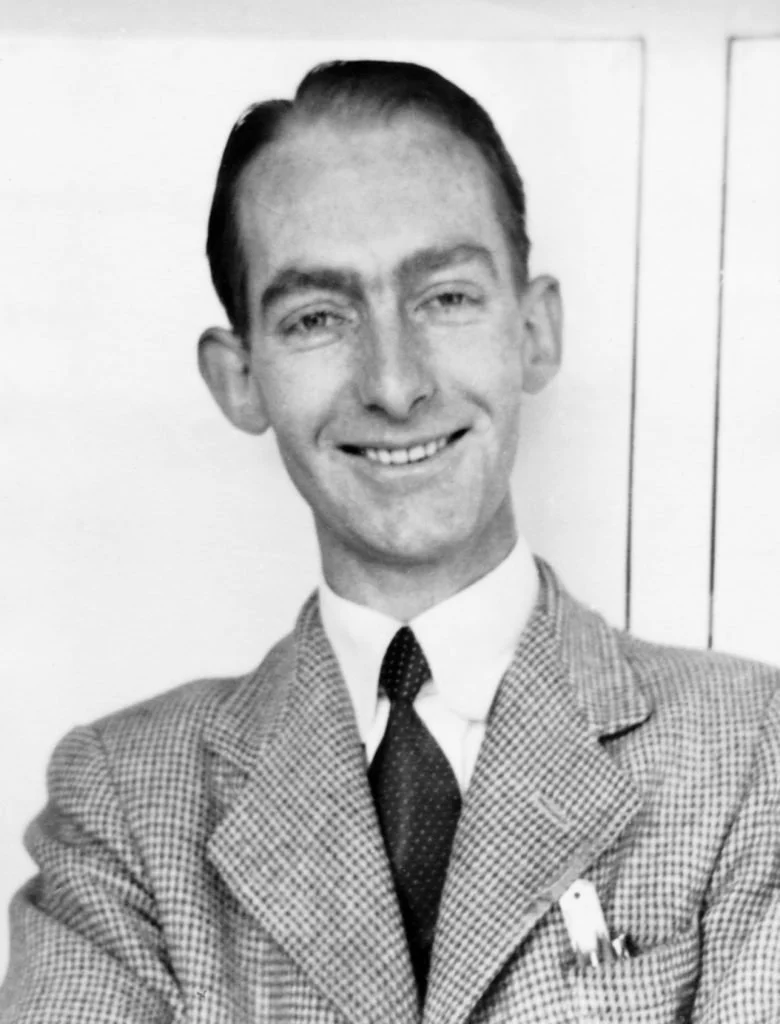
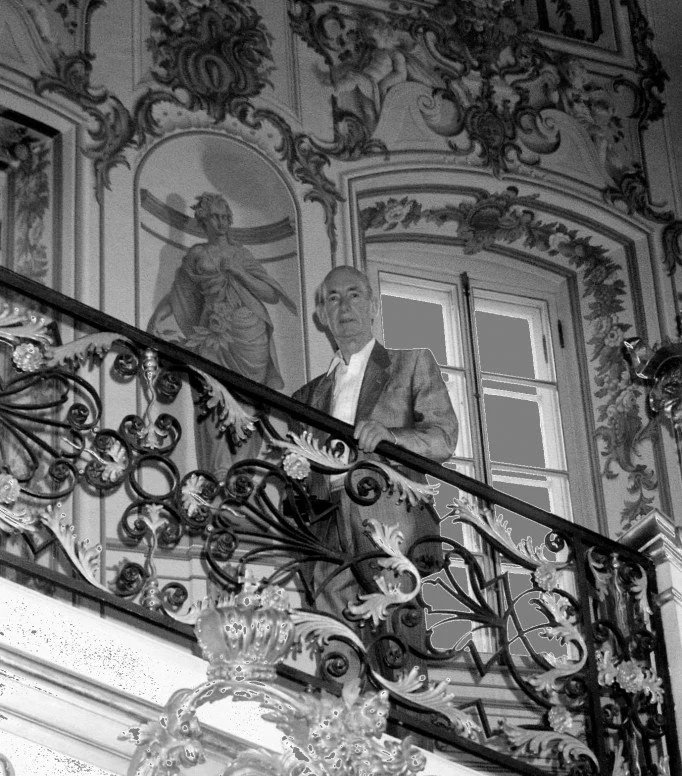
The life of Theo Fabergé
NOTE ON COPYRIGHT AND THE TRADEMARK “Fabergé”
For information about the historical use of the Fabergé name and the copyright attribution of Theo Fabergé’s designs for the St. Petersburg Collection, please read our Copyright & Trademark Notice.
In Royal Hands
The relationship between the Fabergé family and royalty spans generations.
The first Imperial Egg was presented by Tsar Alexander III in 1885, establishing a tradition that would define an era of craftsmanship and courtly patronage.
In Britain, the Royal Family today holds the world’s largest collection of historic Fabergé works. Within this lineage, Theo Fabergé created pieces connected to royal occasions, including a prize-winning casket for Her Majesty Queen Elizabeth II’s Silver Jubilee. H.R.H. Princess Alexandra received his Presentation Golden Egg, and his work was admired by H.R.H. the Duke of Gloucester.
These associations were not sought.
They were earned.
Creations Theo Fabergé continues to honour that heritage with integrity, discretion and uncompromising craftsmanship.
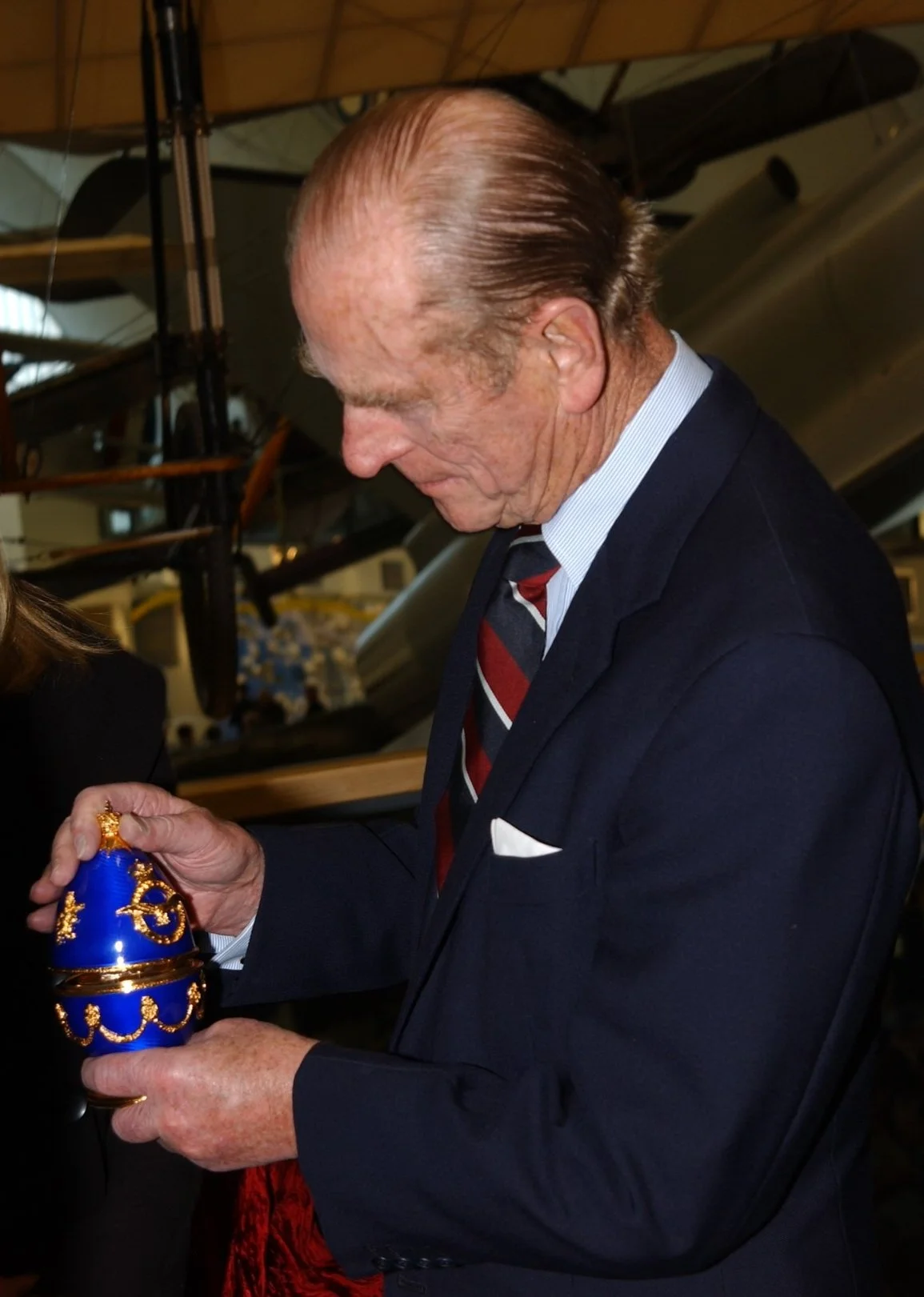
Duke of Edinburgh admiring the Milestones Of Flight Egg
A Presidential Commission
In 2000, Theo Fabergé was commissioned to create the White House Egg, marking the 200th Anniversary of the residence of the President of the United States.
The egg was presented in Washington, where Hillary Rodham Clinton received the creation at the First Lady’s Luncheon.
The White House Egg stands as a symbol of diplomatic heritage — a British-born master craftsman, grandson of Carl Fabergé, honouring one of the world’s most recognised institutions.
Executed with the precision and integrity synonymous with Creations Theo Fabergé, the commission reflects the enduring international reach of the family legacy — from Imperial Russia to modern Britain, and across the Atlantic to the United States.
This was not a reproduction of the past.
It was history acknowledged at the highest level.
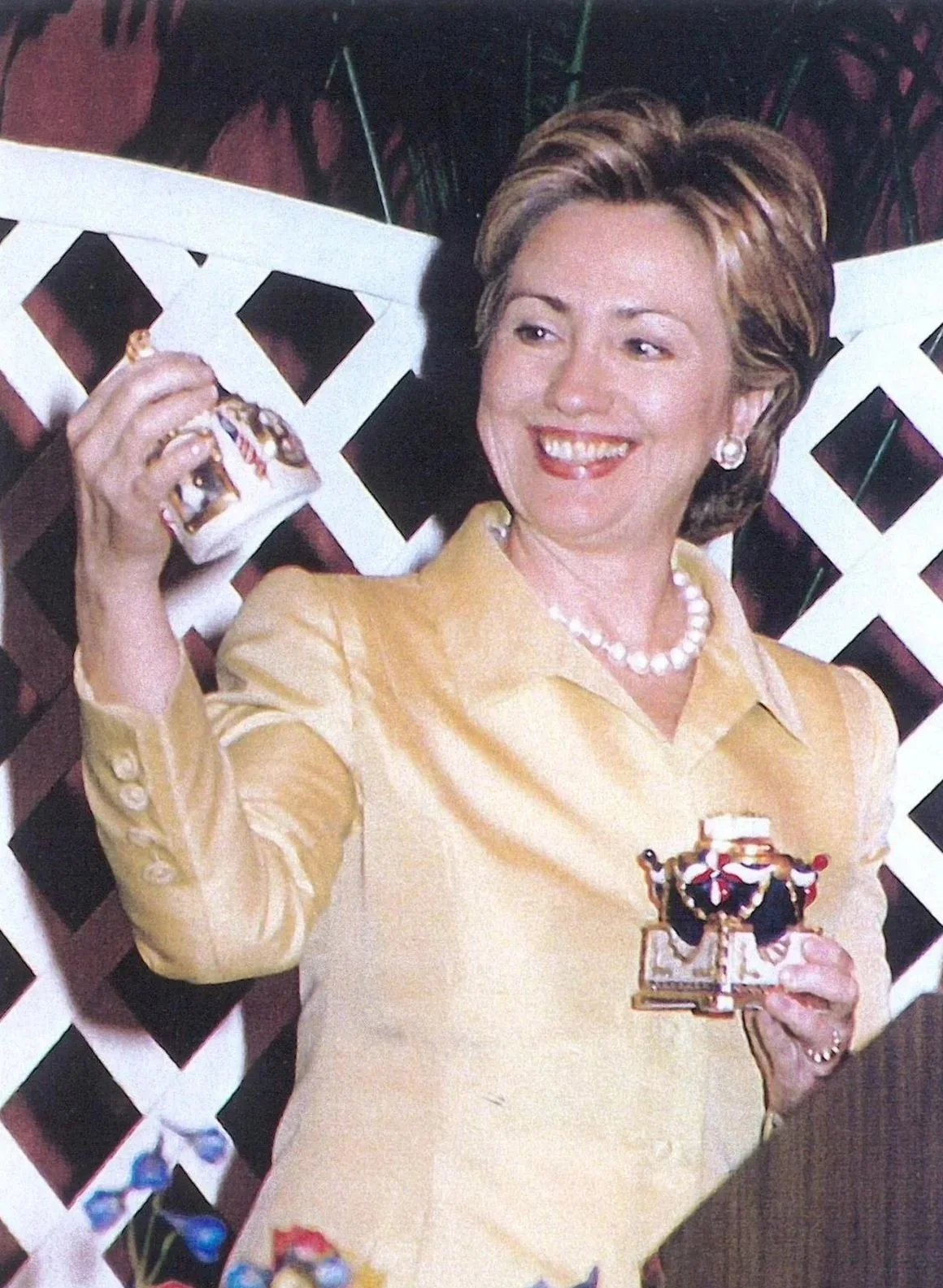
Hillary Clinton with the White House Egg Creation