Theo Fabergé: Designer, Master Craftsman
and Grandson of Carl Fabergé
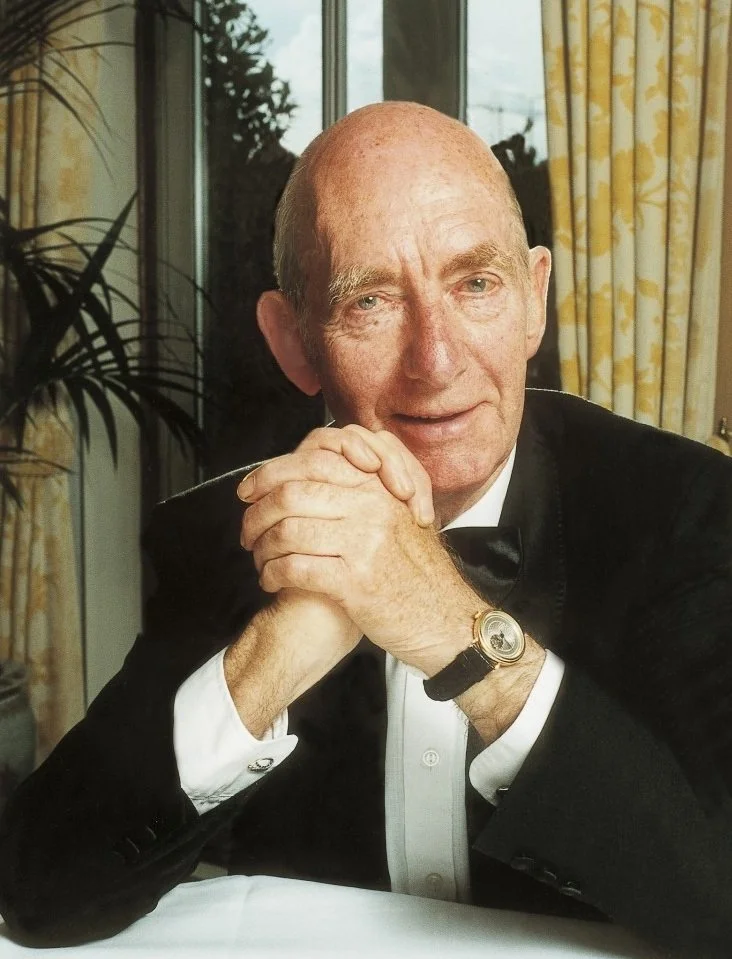
Theo Fabergé in 1998, wearing his prototype wristwatch, which he introduced in Basel the following year.
Theo Fabergé (1922–2007) was an English designer, engineer and master craftsman, and grandson of Peter Carl Fabergé. His remarkable life brought together precision engineering, ornamental turning and a family identity he did not discover until adulthood. Through an original body of work conceived in England, Theo established the creative legacy that continues today through Creations Theo Fabergé.
A short film tracing Theo Fabergé’s journey from precision engineer and ornamental turner to master craftsman and creator of an internationally collected body of original work.
A Maker From the Beginning
Born in London on 26 September 1922, Theo grew up as Theo Woodall, unaware of his connection to the Fabergé family. An instinctive desire to make things was evident early on. As a child, he built models, fashioned tools for his own projects and excelled at practical crafts. Boats and aircraft particularly captured his imagination, combining form, movement and technical ingenuity.
At 14, while still at school, he attended evening classes in technical drawing, draughtsmanship and engineering science. He soon entered General Aircraft at London Air Park, Feltham, first working in the Tool Room and Drawing Office before beginning a rigorous five-year apprenticeship at 16. His training encompassed aircraft manufacture, foundry work, machining, instrument-making and the maintenance and repair of machinery.
During the Second World War, he worked in the aircraft industry and later served in the Middle East. Returning to Britain in 1947, he developed a career in precision engineering, production and management. In 1967, he founded Theobar Engineering, producing specialist electro-mechanical equipment, instruments, jigs and press tools. The discipline acquired during these years would later become fundamental to his artistic work.
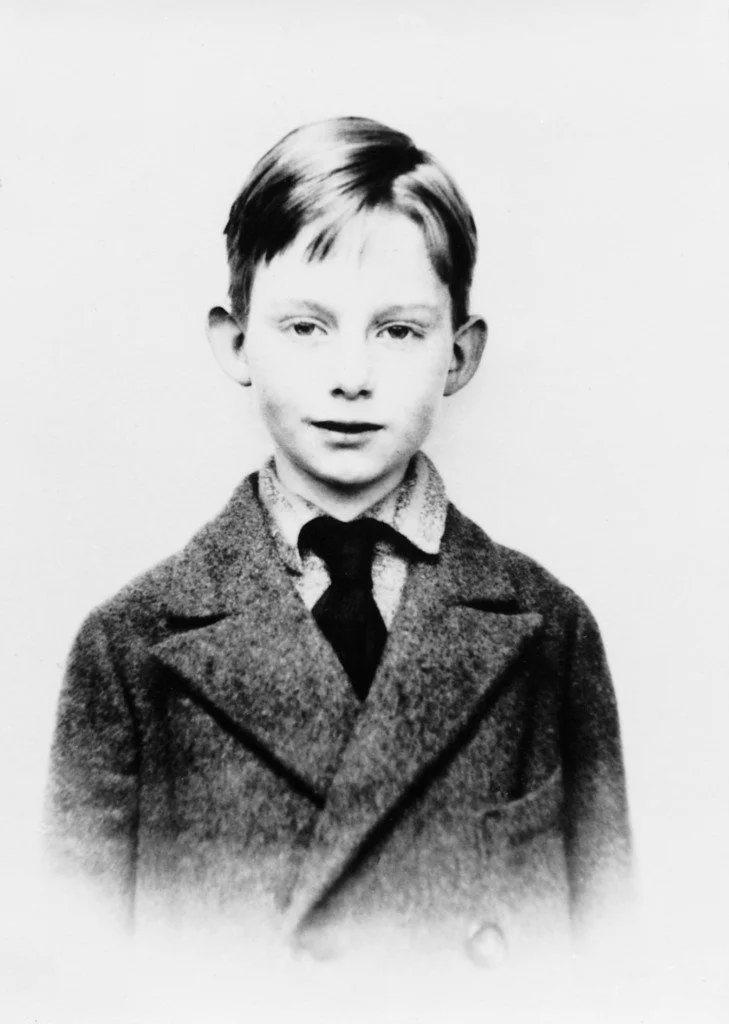
Theo Fabergé as a child in England.
The Discovery That Changed His Life
In January 1969, following a family funeral, an aunt suggested that Theo obtain a copy of his birth certificate. It revealed that his father was Nicholas Leopold Fabergé, the youngest son of Peter Carl Fabergé. At 47, Theo learned that the surname he had lived under was not his own and that he was the grandson of the celebrated Russian jeweller and goldsmith.
The discovery did not manufacture his abilities; those had been developing since childhood and through decades of engineering. It did, however, cause Theo to reconsider how he wished to use them. He increasingly sought work that united technical precision with beauty, proportion and imagination. Determined to be recognised for his own skill rather than simply for his ancestry, he began the demanding transition from engineer to artist-craftsman.
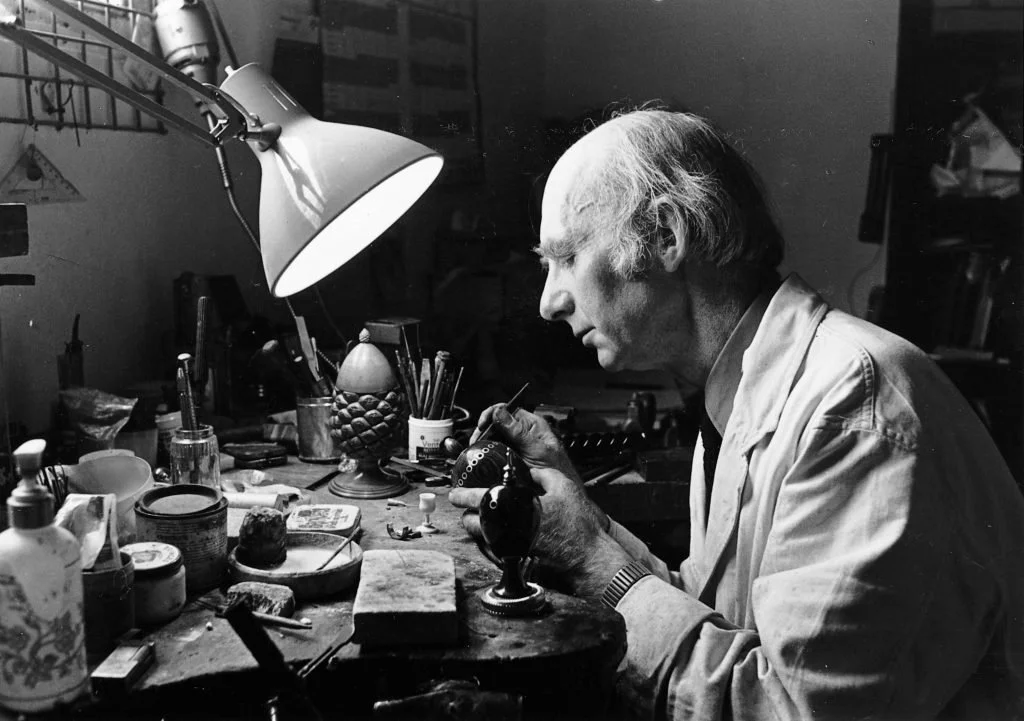
Theo Fabergé at work in his English studio in 1984.
From Precision Engineering to Ornamental Turning
Theo began a part-time silversmithing course in 1970 and experimented with silver and enamel. An interest in polishing natural stones led him to the ornamental turner Fred Howe, whose work on a complex Holtzapffel lathe revealed the artistic potential of a machine that spoke directly to Theo’s engineering mind.
He attended his first meeting of the Society of Ornamental Turners in 1972. Two years later, after selling his engineering business, he rented a workshop and worked as a general craftsman, restoring clocks, furniture and unusual objects while developing his own designs. In 1975, he acquired an antique Holtzapffel ornamental lathe made in 1860. It took two years to restore and return to full working order, and it became central to his craft.
Recognition followed quickly. Theo won second prize in the Worshipful Company of Turners’ triennial competition in 1975. His Silver Jubilee Ivory Casket later received the Lady Gertrude Crawford Medal in 1978, the Company’s highest award for ornamental turning, and he was elected a Freeman Prizeman. On 7 March 1979, he was admitted to the Freedom of the Worshipful Company of Turners. These honours established his reputation on the merit of his workmanship before the egg form became central to his artistic identity.
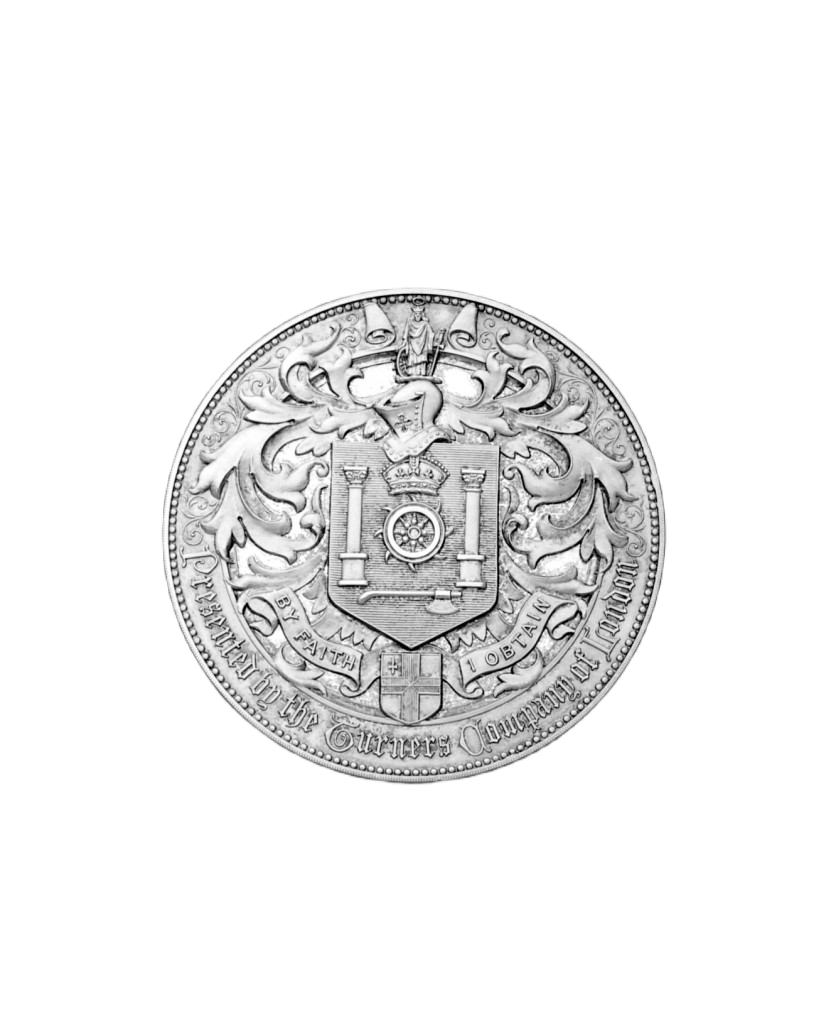
The Lady Gertrude Crawford Medal, awarded to Theo Fabergé in 1978 for ornamental turning.
The Egg Becomes an Art Form
Theo initially resisted making decorative eggs. He held his grandfather’s workshop achievements to an exacting standard and did not want to imitate them. In 1979, however, while making lace bobbins for a lady in Suffolk, her 12-year-old son Peter persuaded Theo to break his vow and make him a simple egg turned from yew wood. Known as Peter’s Egg, it contained no surprise, but it marked an important beginning.
By 1981, Theo had created his first documented surprise Egg Creation: a yew-wood design containing a rising platform for a ring. That October, a standing egg in yew and brass exhibited at Goldsmiths’ Hall attracted the attention of writer and banker John Andrew. The encounter helped bring Theo’s work to a wider audience and showed that the egg could become a distinctive medium for his ideas, engineering, and craftsmanship.
The concealed surprise became an important part of Theo’s design language, allowing an object to unfold into a story. His Egg Creations drew on nature, history, music, architecture, and personal commemoration, but they were contemporary designs authored by Theo rather than recreations of historic works.
Establishing the Collection
In the early 1980s, Philip Birkenstein encountered an article about Theo and visited his English workshop. He found a space filled with specialist tools, rare woods, completed works and developing ideas. Philip believed Theo’s designs deserved a wider international audience. Following months of discussion, the enterprise that became The St Petersburg Collection was established in 1984 and formally launched in 1985.
Theo remained the creative authority. He conceived each design, undertook the ornamental turning and much of the engraving, selected specialist craftspeople and approved the finished work. Enamellers, silversmiths, gem-setters, crystal cutters, engravers and box makers contributed their individual skills under his direction. This model echoed the historic House’s collaborative workshop tradition while remaining entirely focused on Theo’s own designs.
From the outset, every design was strictly limited. Editions never exceeded 750 worldwide, and some comprised as few as six pieces. Each Creation was numbered, and production was controlled to preserve rarity, consistency and the integrity of Theo’s original intention.
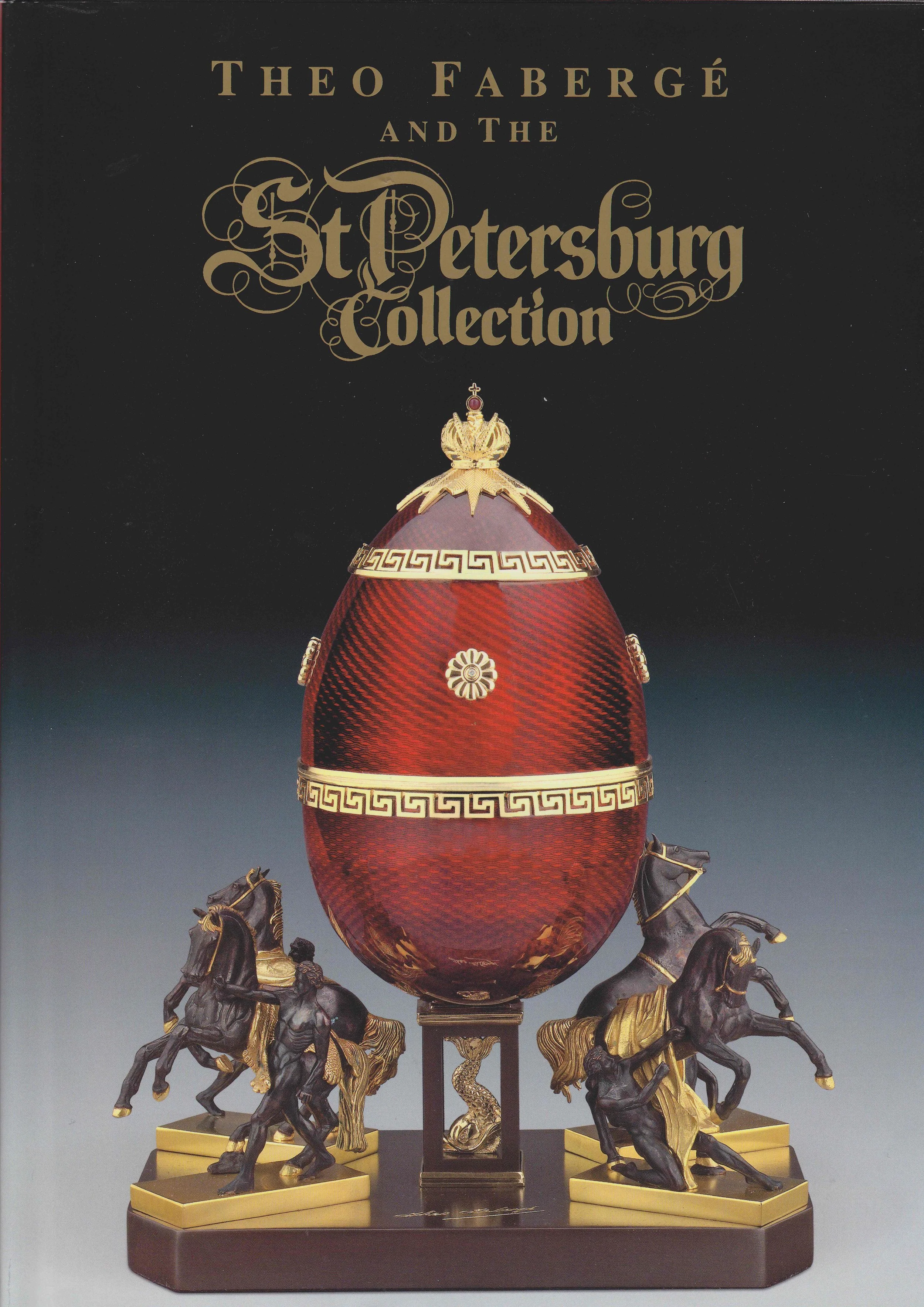
The 2016 fourth edition of Theo Fabergé and The St. Petersburg Collection by Andrew Moore.
An International Reputation
The Collection made its United States debut at Marshall Field’s in Chicago in November 1986. Theo subsequently travelled widely to meet collectors, speak about his work and represent the Collection at exhibitions. His approachable manner, practical knowledge and quiet humour allowed audiences to encounter not only the Fabergé family story but the working craftsman behind each design.
His commissions and presentations connected his work with museums, historic institutions, charitable causes and significant public occasions. The St Vladimir Egg was created for the Millennium of the Baptism of Russia; the Friendship Egg commemorated an exhibition of Imperial works in San Diego; the St Petersburg Egg was presented in the city of his family’s historic association; and later creations supported restoration work at Peterhof and the Alexander Palace.
In the United States, Theo designed the White House 200th Anniversary Egg. The first limited-edition egg was delivered in Washington, and Hillary Rodham Clinton received a White House Egg in 2000. Theo also produced designs for Boys Town, the modern Olympic Games, and other commemorative and charitable projects.
His interests extended beyond Egg Creations. In 1999, at the age of 76, Theo introduced a collection of Swiss-made mechanical wristwatches at the international watch and jewellery fair in Basel. The collection united his lifelong interest in precision mechanisms with an egg-shaped aperture through which the movement could be viewed. It was the first wristwatch collection designed by a member of the Fabergé family.
Honours Character and Conviction
Theo’s work brought formal recognition, but those who knew him consistently described him as modest, exacting, and generous. He encouraged young makers to persevere with their own ideas, speak honestly about their work and refuse to surrender their standards. He believed that craftsmanship carried responsibility: to materials, to the people who practised endangered skills and to the wider world.
In 2002, as he marked his 80th birthday, the Worshipful Company of Turners admitted him to its Livery as an Honorary Liveryman in recognition of his contribution to turning in Britain and internationally. The Company subsequently named its 2004 turned-egg competition in his honour.
Charitable work remained closely connected to Theo and the Collection. His designs helped raise funds for organisations including the PDSA, Children in Need, the Rainforest Foundation and cultural preservation projects in and around St Petersburg. For Theo, the reach of his work was measured not only by ownership, but by what it could contribute.
A Living Creative Legacy
Theo Fabergé died peacefully on 20 August 2007, aged 84. He left an extensive archive of original designs and a network of craftspeople who understood his standards. His legacy is therefore not confined to finished objects or family history. It remains present in the designs, techniques and exacting decisions through which his work continues to be realised.
Today, Creations Theo Fabergé preserves that authorship and discipline. New examples are brought to life from Theo’s original designs in strictly limited editions, using the specialist craftsmanship and attention to detail that defined his work. Each Creation forms part of an unfolding artistic archive shaped by one designer’s unusual journey from engineer to master craftsman.
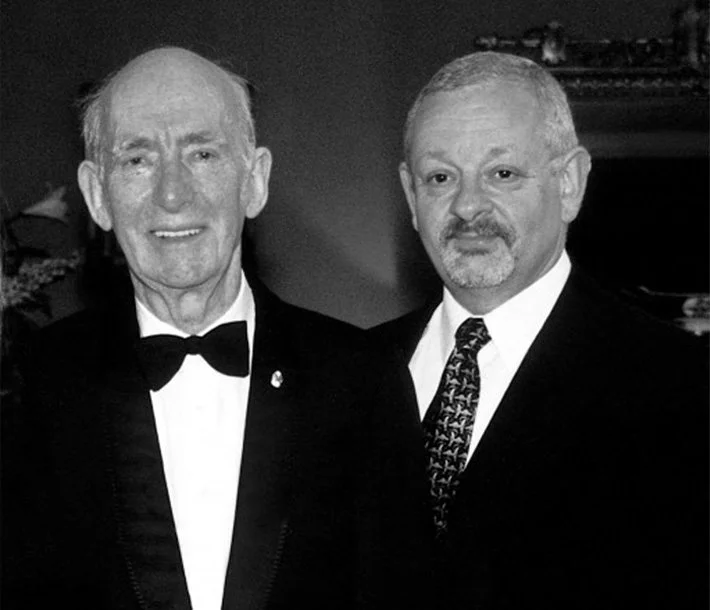
Theo Fabergé with Philip Birkenstein.
Discover Theo Fabergé’s Creations
Explore Theo Fabergé’s original Egg Creations, watches, jewellery, and objets d’art; discover the craftsmanship behind their making, or learn where to see the collection.